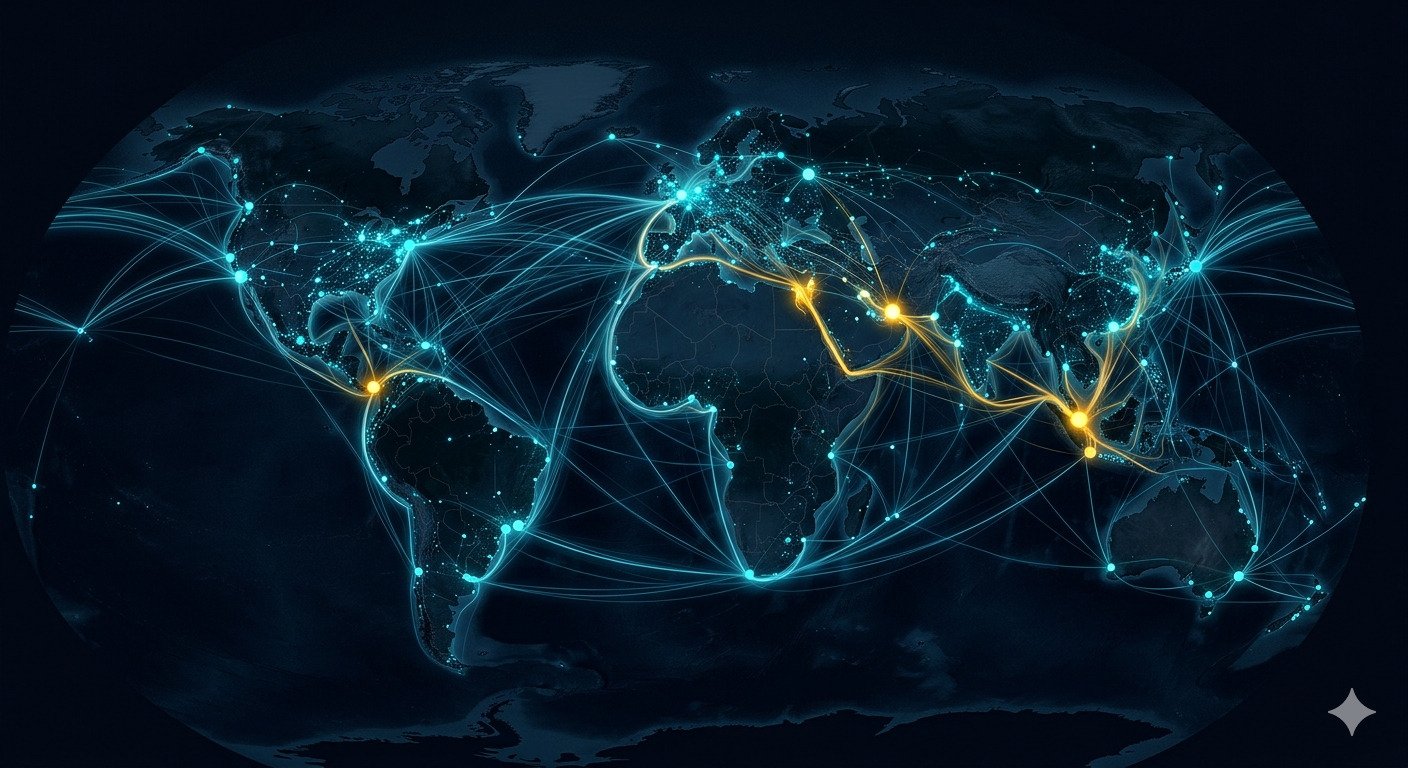
We instinctively associate the economy with peace, and therefore war and economics are often imagined as opposites. Markets and exchanges indeed require stability, while war evokes destruction and violence. Yet war is, in many respects, economic in nature. It mobilizes industries, redirects innovation, reshapes public finances, and reorganizes global trade. The conflict in Ukraine offers a striking illustration as it triggered Europe's largest energy shock in decades, disrupted global grain exports, accelerated inflation across advanced economies, and forced governments to confront industrial and technological dependencies. But Ukraine is not an isolated case, as the rivalry between the United States and China, and the battles over artificial intelligence all suggest that war cannot be understood separately from the economic systems that sustain and shape it. War economics emerges from these observations, treating conflict as a phenomenon that economic analysis is equipped to illuminate.
The measurable cost of war
Classical economic thought long treated war as pure waste. Where trade, in Ricardo's account, rests on specialization and mutual gain, conflict destroys capital, interrupts international trade, and forces societies to forgo everything they would otherwise produce. For two centuries, war was treated as a shock to be absorbed, affecting markets rather than constituting an object of economic analysis in itself. Recent empirical research has given substance to that intuition.
On large samples of conflicts, a war of average intensity is associated with a fall in output of roughly 10% in war-affected economies and a rise in consumer prices of about 20%.1 Capital stock, productivity, and equity returns all decline sharply. These findings build on decades of research in civil war economics, showing how the destruction of physical and human capital, combined with weakened institutions, depresses growth long after fighting ends.2
Furthermore the losses do not stop at the border. Using a gravity model on data going back to 1870, economists have shown that armed conflict produces large and persistent reductions in bilateral trade, for belligerents and neutrals alike, of a magnitude comparable to the direct costs of war.3
The invasion of Ukraine illustrated this channel directly. European gas prices rose to nearly ten times their pre-war level in 2022, disrupting energy-intensive industries and pushing inflation back to the centre of monetary policy debates.
The full bill exceeds what military budgets disclose. Once debt, veterans' care, and opportunity costs are included, the Iraq war is estimated to have surpassed three trillion dollars — several times its stated budgetary figure.4 More broadly, the fiscal expansion that wars produce tends to persist long after they end, a ratchet effect well documented in fiscal history. The United States offers the clearest illustration as the federal spending never returned to its pre-World War II levels relative to GDP.
All this still describes an economy that absorbs conflict. Yet economic structures do more than absorb shocks; they also shape the way states compete.
Interdependence as an economic instrument of war
Economic interdependence itself, which was long associated with stability and peace in postwar liberal thought, has increasingly become one of the principal instruments of inter-state rivalry. Empirical research challenges the older liberal intuition that trade prevents war.5 While bilateral trade reduces the probability of conflict by raising mutual costs, this effect weakens in highly diversified global networks. When economies are connected to many partners, the loss of any single relationship becomes less significant. The globalization of the 1990s and 2000s, by spreading dependencies across an ever-wider network, gradually eroded the channel through which trade was expected to sustain peace.
But not all dependencies dilute. Global networks of finance, information, and technology are increasingly structured around a few choke points — from payment systems and reserve currencies to advanced semiconductor production and design.6 Two recent cases make the mechanism visible. The pre-2022 dependence between Europe and Russia was deeply asymmetric but mutual, and the coercion that followed cut both ways. Sanctions and counter-restrictions redistributed vulnerability rather than eliminating it. The American export controls on advanced semiconductors to China, by contrast, exploit a choke point that is genuinely one-sided. A handful of firms — notably ASML in the Netherlands and TSMC in Taiwan, which alone produces over 90% of the world's most advanced chips — control the technological frontier. Washington's jurisdiction over these underlying technologies allows it to deny China access to the most advanced computing capabilities.
These dependencies, once weaponized, take the institutional form of sanctions. Originally devised in the interwar period as a pacific alternative to war, they have multiplied dramatically: their frequency doubled between the 1990s and the 2000s, then doubled again in the 2010s. Yet their success rate has collapsed in parallel, falling from roughly 35 to 40 percent in the late twentieth century to below 20 percent by the mid-2010s.7 The Russian case after 2022 illustrates this shift. Energy exports were rapidly redirected toward China and India, reducing the impact of Western restrictions.
The systemic consequence is uncomfortable for those who deploy the weapon. The more states weaponize interdependence, the more their rivals seek autonomy. Autonomy which is being reached through renewed industrial policy, friend-shoring and the construction of parallel financial and technological systems. Economic warfare accelerates the fragmentation of the very global economy that made such warfare possible in the first place. But fragmentation is not merely a systemic consequence as it is also a strategic signal, feeding the calculations of those who must decide whether tomorrow's balance of power will be more favourable than today's.
Uncertainty, and conflict
Yet economic dynamics do not merely shape how states compete. They may also shape why they fight. The puzzle, in the rationalist tradition, is that if war is costly for both sides, rational states should always prefer a negotiated settlement.8 Yet they do not. One key reason is the commitment problem. When the future balance of power is expected to shift, a rising state cannot credibly promise to refrain from exploiting its later advantage, and a declining one has reason to confront it before the shift consolidates. What often matters is not growth alone, but the military capabilities it may eventually finance, and the uncertainty surrounding them.9 Under imperfect information, economic ascent itself generates preventive fears. The current tensions between the United States and China can be read less as a purely ideological confrontation than as the strategic expression of a power transition in which economic trajectories shape the menu of possible military futures. China's share of world GDP has risen from roughly 4% in 2000 to nearly 18% today, while the United States' has fallen from 30% to 26% over the same period. These calculations do not happen in a vacuum.
War is not chosen by abstract states, but by political leaders operating under domestic constraints whose incentives shape whether confrontation appears preferable to compromise.10 And as the terrain on which those decisions are made becomes increasingly economic, the line between economic power and national security dissolves. Advanced semiconductors are at once commercial products, critical infrastructure and military assets. Industrial leadership in artificial intelligence and computing is more than ever a determinant of future strategic position, and what was once economic competition has become constitutive of the balance of power itself.
Conclusion
In an age defined by energy networks, supply chains, data and advanced computing, the economy has become the principal terrain on which war is now prepared, fought, and decided. It shapes, more than ever, the forms conflict takes, the instruments through which it is fought, and the incentives that make it possible. What we are witnessing today is not the return of war after a peaceful interlude, but the latest mutation of an inter-state competition that never stopped.
Bibliography
1. Federle, J., Meier, A., Müller, G. J., Mutschler, W. & Schularick, M. (2026). The Price of War. American Economic Review, 116(3), 791-827.
2. Blattman, C. & Miguel, E. (2010). Civil War. Journal of Economic Literature, 48(1), 3-57.
3. Glick, R. & Taylor, A. M. (2010). Collateral Damage: Trade Disruption and the Economic Impact of War. Review of Economics and Statistics, 92(1), 102-127.
4. Stiglitz, J. E. & Bilmes, L. J. (2008). The Three Trillion Dollar War: The True Cost of the Iraq Conflict. New York: W. W. Norton.
5. Martin, P., Mayer, T. & Thoenig, M. (2008). Make Trade Not War? Review of Economic Studies, 75(3), 865-900.
6. Farrell, H. & Newman, A. L. (2019). Weaponized Interdependence: How Global Economic Networks Shape State Coercion. International Security, 44(1), 42-79.
7. Mulder, N. (2022). The Economic Weapon: The Rise of Sanctions as a Tool of Modern War. New Haven: Yale University Press.
8. Fearon, J. D. (1995). Rationalist Explanations for War. International Organization, 49(3), 379-414.
9. Debs, A. & Monteiro, N. P. (2014). Known Unknowns: Power Shifts, Uncertainty, and War. International Organization, 68(1), 1-31.
10. Bueno de Mesquita, B., Smith, A., Siverson, R. M. & Morrow, J. D. (2003). The Logic of Political Survival. Cambridge: MIT Press.