Note: This article was written in January 2026 and it might no longer be a faithful representation of the ongoing armed conflict in Iran and in other nations.
On January 3rd 2026, the president of Venezuela, Nicolás Maduro, was arrested by the United States. This operation has raised a lot of criticism around the world regarding the legal basis of such an action. The criticism mainly comes from South American countries, Russia, China, and Iran, highlighting the division between the United States and China. The American government mainly justifies this operation by saying that it is part of the fight against drugs. The American administration claims that Nicolás Maduro was working with drug cartels (which explains the presence of the DEA in the operation).
Also, Venezuela has one of the largest oil reserves in the world. Donald Trump has said multiple times that American oil companies will invest in Venezuela; however, some oil companies state that the country needs more reforms before they can invest. This scepticism from oil companies can partly be explained by the nationalisation of the oil industry in 1976 and the low level of investment since Hugo Chávez came to power.
One of the countries most affected by this situation was Cuba. Under an agreement ratified in 2000, Venezuela committed to supplying the island with 53,000 barrels of oil per day at a subsidised price, and Cuba could pay part of the bill through services and technical assistance to Venezuela. This agreement was expanded in 2005, increasing deliveries to 93,000 barrels per day. This arrangement was later halted by the Trump administration and by the arrest of Maduro, which helps explain the current oil shortages in Cuba.
The capture of the Venezuelan president shocked the world, but a few weeks later Donald Trump threatened to impose tariffs on eight European countries unless they supported his plan to buy Greenland. This interest from the United States in Greenland is not new. During a speech at the World Economic Forum in Davos on 21 January, Donald Trump said, "I don't want to use force, I won't use force," referring to Greenland.
In the past, the United States has already made several offers to buy Greenland, including during Donald Trump's first term. The proximity between Greenland and the United States makes the island an important element of American defence, especially during the Cold War. Donald Trump once stated that the United States needed to "own" Greenland to prevent China and Russia from doing so. However, since 1951 an agreement has existed between the United States and Denmark, extended in 2004 to include Greenland as a self-governing country rather than a Danish colony. This agreement allows the United States to establish as many military bases on the island as is necessary to protect them. During the Cold War, there were more than 50 U.S. military installations in Greenland; today, only one remains.
Another explanation for the rise in interest in Greenland is the "Golden Dome" project, presented several times by Donald Trump. He stated that Greenland is "vital for the Golden Dome that we are building." The Golden Dome is a defence system designed to intercept missiles, inspired by the Israeli Iron Dome. This situation raised significant concerns about European reliance on the U.S. from both a military and technological perspective. The United States supplied 52% of NATO members' military equipment between 2015 and 2019. Most European countries are expected to remain very dependent on the United States in the future. For example, Germany and Belgium are purchasing new F-35 aircraft and will rely heavily on the United States for maintenance. This dependence is also reinforced by the need for the nuclear umbrella provided by the United States.
A little word about critical minerals in Greenland. Donald Trump has said that this is not the reason the United States is interested in the island, which makes sense given that the exploitation costs of any mine would be extremely high due to the severe cold. However, oil and gas in the seas around Greenland may become accessible as global warming and ice melt progress.
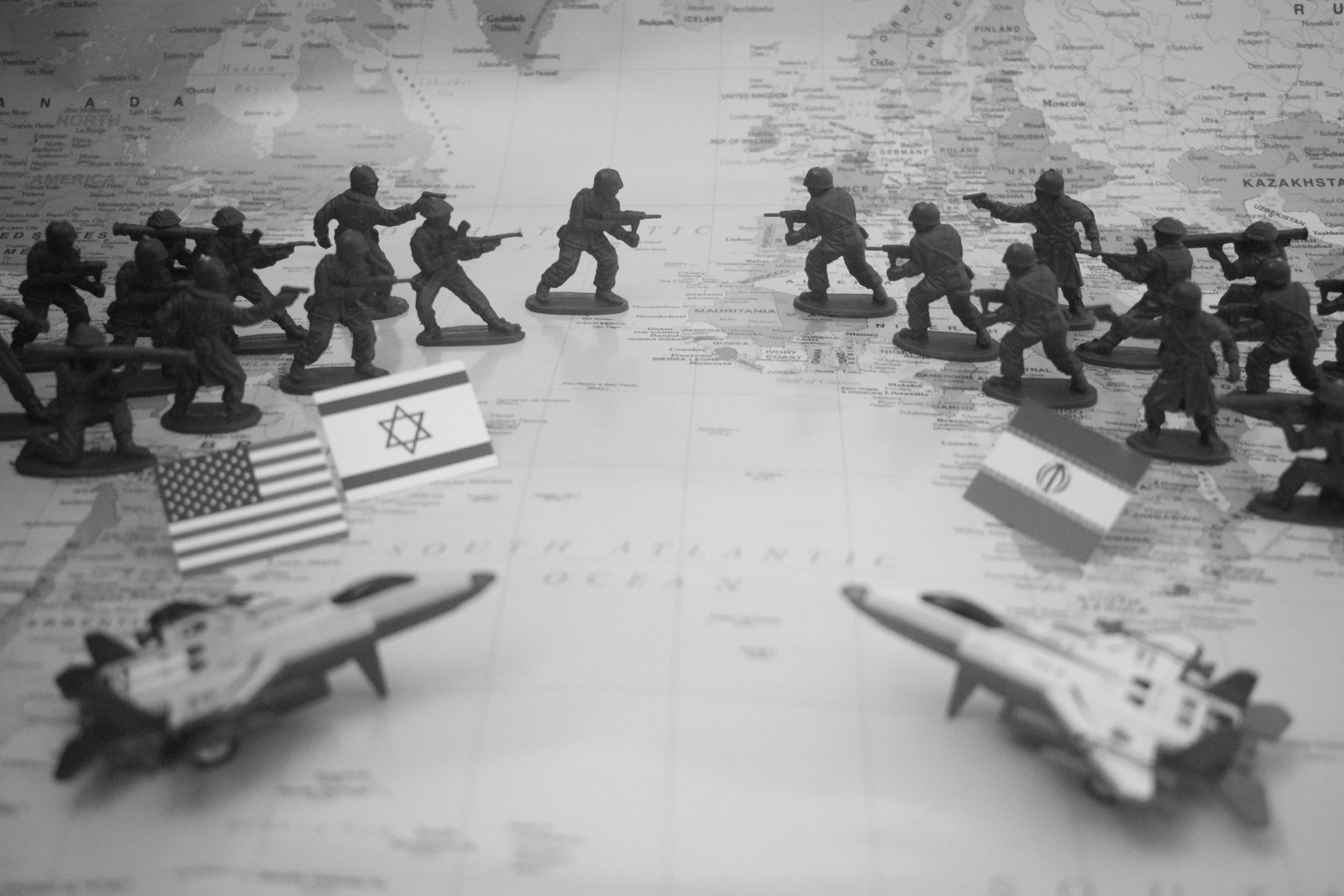
To broaden the overview of the tensions involving the United States around the world, we now turn to the Middle East, where an American naval armada is currently stationed. This force was deployed by the United States following a rise in tensions with Iran over the Iranian nuclear programme, long-range missile development, and the intense repression of recent protests in Iran, after which Iranian authorities announced 5,600 deaths.
Donald Trump threatened Iran with "something very tough" if the United States and Iran failed to reach a deal. Some peace talks have taken place in Oman, but no agreement has been announced. Iran has stated that it is ready to consider compromises to reach a nuclear deal with the United States, if Washington is willing to discuss lifting sanctions. An intervention in Iran would also be risky for the Trump administration, as midterm elections are approaching in the United States, during which both the House of Representatives and the Senate will be renewed.
Bibliography
BBC, "Why has Trump attacked Venezuela and taken Maduro?" (2026).
Cairn, "Pétropolitique dans un État autoritaire : l'exemple du Venezuela d'Hugo Chavez."
BBC, "How could Europe respond to Trump's Greenland tariffs?"
BBC, "Trump says US need to 'own' Greenland to prevent Russia and China from taking it."
National Interest, "The US Military Once Had a Much Bigger Presence in Greenland."
Politico, "US dominates European weapons purchases: report."
ABC News, "Trump says 'massive Armada' heading to Iran, warns time is running out for nuclear deal."
CNBC, "After weeks of tension, Trump is still talking tough on Iran. Here's what could happen next."