Data data nowhere, nor any drop to see
If we ask, "how many Indians today reliably use electricity for their household needs?"
We do not have a clear answer. And the reason for this lack of clarity is where our troubles begin.
On April 29, 2018, the government announced 100% rural village electrification. That is, all villages in India now have access to electricity. Although this sounds fantastic, it is a flawed metric from the get-go. One of the most surprising criteria for a village to be considered "electrified" is that only 10% of its households need to have electricity. Despite this low threshold, it still counts as electrification. Village electrification conveys nothing about how many households have electricity.
In October 2017, the government launched Saubhagya, aiming to connect every household in the country to the grid. The Saubhagya dashboard today claims 100% household electrification in every state except Chattisgarh, where it claims the figure to be 99%. This figure is dicey and questionable, with little to no recent independent study verifying this claim.
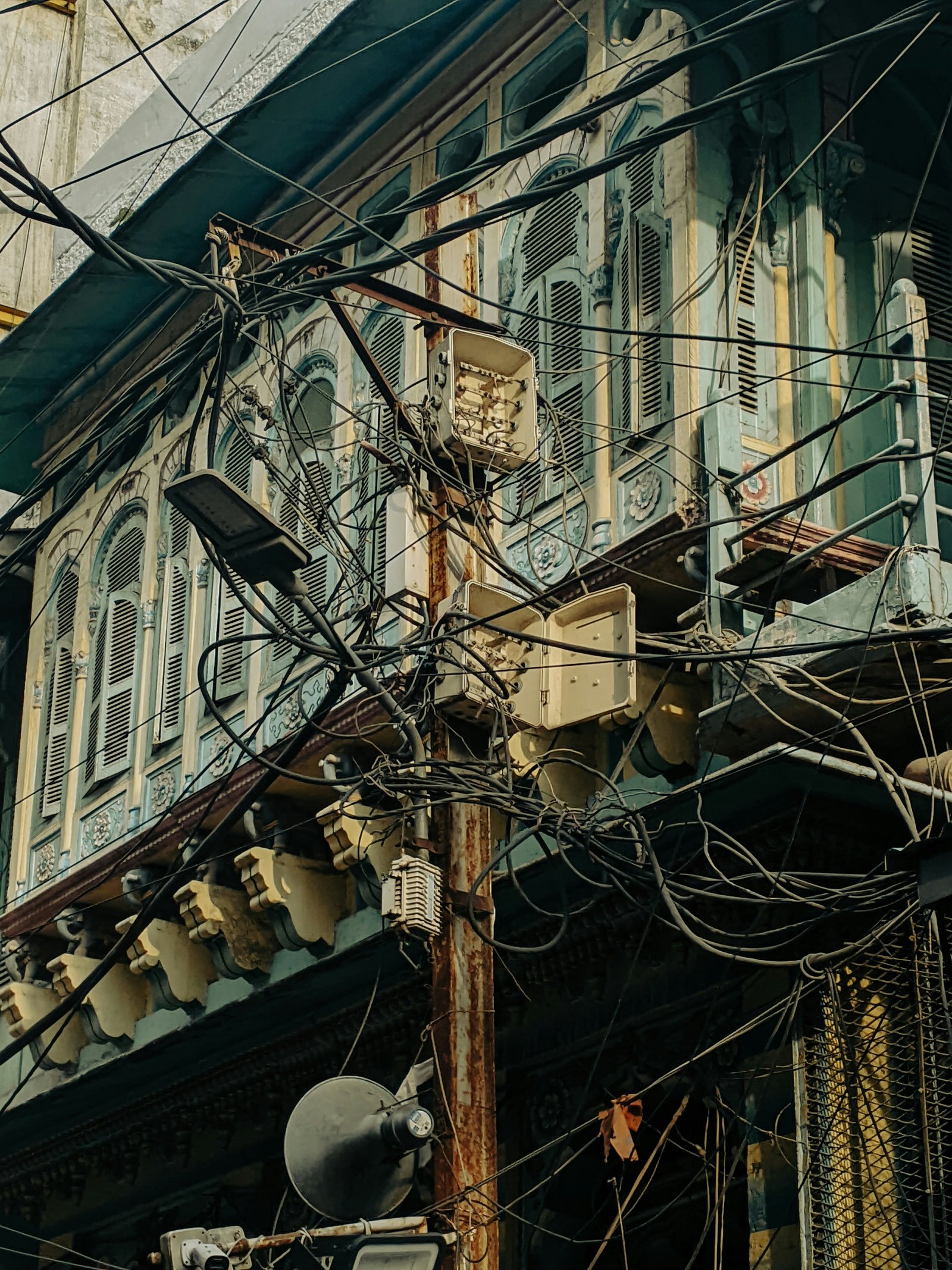
The way it works is simple: the government identifies a certain number of households as unelectrified, and once all of them are connected to the grid, they can claim 100% electrification. But here's the catch, within a short period, millions of households just disappeared from the un-electrified category across multiple states. Moreover, simply being connected to the grid does not mean they are getting electricity. Wires to your home do not guarantee power flowing through them. This is a pattern with public services: governments often focus on the stock of infrastructure (like how many power lines exist) because it is more visible. But what matters is the flow of services, such as the consistent availability of electricity, and that part is much harder to measure and much easier to ignore.
The last reliable estimate of household electrification comes from the 2011 Census, which reported that 67% of Indian households used electricity for lighting. But we still don't have a 2021 Census, and it has been four years past that now—so we simply do not know what has changed. Other sources do provide some figures. The NSSO, based on sample surveys, claims 100% electrification, but this figure is not as reliable as a census would be. Insights from the India Residential Energy Survey (IRES) 2020 claims 97% electricity access. The worry becomes that the households that are not electrified are misidentified in the government's list. Ultimately, the question remains: how many Indians actually have reliable electricity, and how many genuinely benefit from it? Given the lack of recent official statistics, this remains an open and important question.
Electricity as a right and the politician's role
Electricity supply is no doubt an important public service delivery. Despite being an exclusive and scarce resource, the Indian state did not put the burden of its supply on the consumers' ability to pay immediately after independence. In India, electricity is not merely seen as a commodity, but as an inherent right. This treatment of electricity as a right, literature says, is a cause for the chaos in the sector.
The approach of considering electricity as a right disconnects the electricity received from any obligation to pay for it, stripping away the link between consumption and price. These losses hinder the financial viability of electricity distribution companies, reducing their ability to invest in infrastructure and expand access, thus perpetuating inefficiencies.
India also characteristically stands out as an extreme case of electricity theft where transmission and distribution (T&D) losses far exceed global averages. Even under the assumption of an inefficient supply system, T&D losses in India are approximately double the expected figure, with an estimated 20% attributed to power theft. This points to electricity theft, underbilling, wire thievery that is explicitly allowed and perhaps even encouraged.
Finally, political actors play a key role, leveraging patronage to their advantage. By influencing the distribution of electricity, they ensure benefits flow to their supporters, often at the expense of broader equity. Research shows that billed electricity consumption is nearly 40% lower in constituencies of the ruling party, while actual consumption, measured through satellite nightlights, is significantly higher. Underbilling and theft then leads to load-shedding. This happens because utilities, unable to sustain providing electricity at such low prices, are forced to ration it.
Time and again, politicians have blocked smart metering because it would mean accurate pricing — and that would mean their constituents paying more than they do now. Higher electricity prices would be unpopular, and opposing smart metering allows them to appear as protectors of affordable power. It is an easy political win. But in doing so, we stay trapped in a low-revenue, low-quality equilibrium, where everyone loses in the long run.
Patronage also means unequal implementation of policies. The probability of being electrified as a village also depended on whether the village came under a ruling party constituency. The Rajiv Gandhi Grameen Vidyutikaran Yojana (RGGVY), launched in 2005 and which aimed to provide household rural electrification, was implemented unequally — not just by region, but by caste and class. Lower-caste majority constituencies had a lower chance to be electrified, and even in places where the ruling party member belonged to disadvantaged castes, they still did not always get access. So what we see, time and again, is new schemes being rolled out, but the poorest rarely see the benefits.
Conclusion
More people have power today than ever before. Scaling anything in a country as vast and complex as India is never easy, and time and again, we have made efforts to expand connectivity. Despite challenges — data gaps, policy missteps, and systemic inefficiencies — we have made undeniable progress.
This essay is not a lament of inefficiency; it is a description of the present inequalities in electricity supply — inequalities that have not emerged by accident, but through a series of fragmented decisions that, in isolation, seemed rational but collectively have constrained the system.
Now, as the world shifts toward renewable energy, India faces a critical inflection point. A fragmented electricity sector, riddled with political patronage and structural flaws, cannot sustain a just and equitable energy future. If we fail to address its entrenched inefficiencies, we risk carrying old inequalities into a new era.
Pragmatism often resigns in the face of India's grand normativism. Anything at scale in this country is a bold move. We have dreamt about electricity for all even before the state had the capacity to provide it. But real and sustainable change requires more than just ambition — it demands systemic reform and actionable plans.
Bibliography
1. "All Villages in India Electrified: PM." Times of India, April 30, 2018.
2. "Electrification of Villages." Lok Sabha Question, answered by Ministry of Power, April 6, 2017.
3. SAUBHAGYA Dashboard. Ministry of Power, Government of India.
4. Scroll Staff. "Modi Government 'Electrified' 100% Households in 25 States by Slashing Targets." Scroll.in, January 24, 2019.
5. Council on Energy, Environment and Water (CEEW). State of Electricity Access and Coverage in India. New Delhi: CEEW, 2019.
6. Aklin, Michaël, Chao-Yo Cheng, and Johannes Urpelainen. "Inequality in Policy Implementation: Caste and Electrification in Rural India." Energy Policy 68 (2014): 421–434.
7. Min, Brian. Power and the Vote: Elections and Electricity in the Developing World. Cambridge: Cambridge University Press, 2015.
8. Dubash, Navroz K., Sunila S. Kale, and Ranjit Bharvirkar, eds. Mapping Power: The Political Economy of Electricity in India's States. New Delhi: Oxford University Press, 2018.
9. World Bank. More Power to India: The Challenge of Electricity Distribution. Washington, DC: World Bank, 2014.
10. Government of India, Ministry of Power. Ujjwal DISCOM Assurance Yojana (UDAY): Scheme for Operational and Financial Turnaround of Power Distribution Companies. 2015.
11. Jessoe, Katharine K., et al. "BJP Electoral Incentives and Rural Electrification." Journal of Economic Development (Forthcoming). UC Davis Working Paper.
12. Burgess, Robin, Michael Greenstone, Nicholas Ryan, and Anant Sudarshan. "The Political Economy of Energy in India." Journal of Economic Perspectives 34, no. 1 (2020): 145–167.
13. Chattopadhyay, Sagnik, and Rohit Chandra. "Political Determinants of Electricity Access in India." Energy Policy 162 (2022): 112780.
14. Aklin, Michaël, Patrick Bayer, S. P. Harish, and Johannes Urpelainen. "Understanding Electricity Access in India: Determinants of Quality and Reliability." Energy Policy 88 (2016): 738–747.
15. Cole, Shawn, and Andrea Canidio. "Corruption and Electrification: Evidence from India." American Economic Review (Forthcoming).
16. Singh, Abhishek, and Johannes Urpelainen. "How Do Political Incentives Affect Distribution of Public Goods? Evidence from India's Rural Electrification Program." SSRN Working Paper, 2022.
17. Pillai, Asha, and Thomas Berthod. "Power, Patronage, and Distribution in Indian States." EPFL Working Paper, 2020.
18. Monstadt, J., Msangi, D. & Otsuki, K. "Power struggles: urban heterogeneity and unruly electricity access in Dar es Salaam." Sustain Sci (2025).
19. "BMC Halts Smart Meter Installations Amid Public Outcry." Times of India, October 25, 2024.