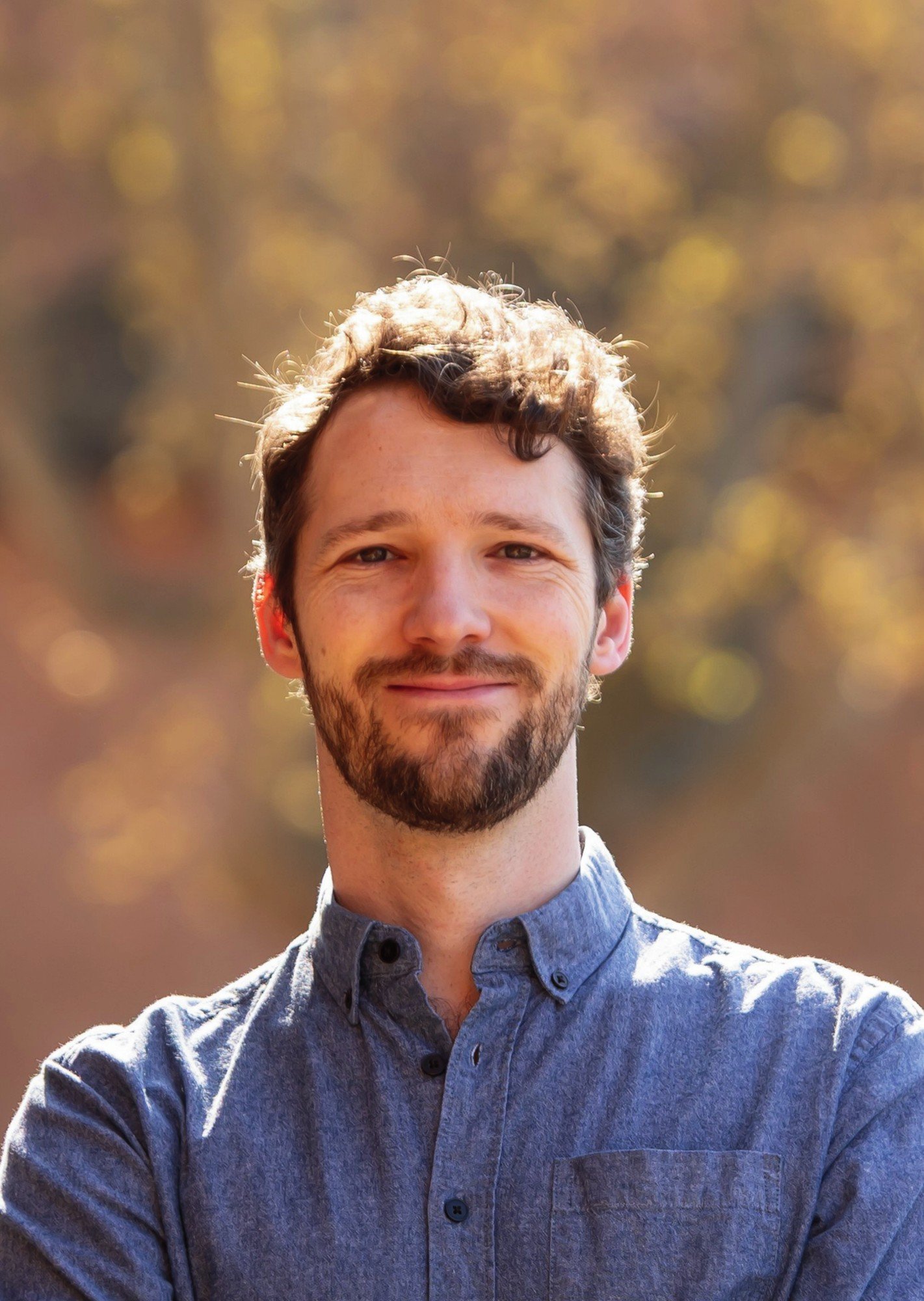
Photography on the right-hand page by Loïc Bourniquel.
Your research focuses on the political economy of armed groups and the role of their leaders during civil conflicts, and also on how individuals working in international organizations can affect foreign policy and development outcomes. Where did your interest in such topics come from?
I have a primary research agenda, which focuses on the political economy of nonstate armed groups in civil conflicts, and a secondary research agenda on the role of individuals and field offices in international organizations (IOs). Civil conflicts are long (median conflict often cited as over 10 years) and are prevalent in many parts of the world. They have long-term negative effects on development, state governance, and the well-being of people in conflict zones. During my PhD, I read many foundational texts on civil war and, despite a lot of relatively recent progress, I realized there's still a lot we don't know about some fundamental elements of these conflicts that affect so many people.
My interest and work on IOs started in earnest when I was an RA during my PhD. For that project, I was working with data on peacekeeping operations, which is one area in which IOs and armed groups overlap. That RA work eventually led to coauthoring a paper, Gender in International Bureaucracies: Evidence from UN Field Missions, and my work on IOs expanded and deepened during my postdoc at Radboud University in the Netherlands, with new projects on foreign aid and diplomacy.
Some of your recent work takes Syria as an example. Given the fragile situation of the country, how did you manage to gather reliable data? What are the specificities of armed groups in Syria?
Data collection and measurement are crucial, and violence during civil conflicts often compromises data collection by degrading state capacity and making research more difficult. In one paper, I combine pre-existing data on Islamic State governance, gathered by triangulating local Arabic-language newspapers, social media data, and Islamic State texts, with original data from the US military's air campaign against the Islamic State. Along with public data on oil prices, I show how changing resource prices and airstrikes impacted Islamic State taxation and social service provision.
In this case, I was able to put together precise data, but there are other instances where this might not be possible. As a result, many studies of civil conflict are based on a subset of cases where higher quality data are available, Colombia being one classic example. The feasibility of research in Syria will continue to evolve as the local security situation shifts with the new government too.
One interesting element of the armed groups in Syria, from a research standpoint, is that there were numerous groups and there was diversity in terms of groups' objectives, sizes, tactics, and levels of institutionalization and governance. Most of the groups were Islamist, though there is significant variation within that category, and none of the groups were Marxist, for example, which may help us think through possible scope conditions for our findings. That said, ideology is only one factor, and many other factors drive armed group behavior.
You also participated in creating a dataset providing data on the backgrounds and prewar experiences of leaders of rebel groups across Africa, Asia, and the Middle East. What is the aim of this project? What role can economists play in such projects?
Yes, I worked with a few colleagues to collect data on jihadist group leaders, drawing on sources in multiple languages (Arabic, English, French, German, Turkish, and Urdu). A lot of research on the behavior of armed groups relies on some amount of observational data, and, given the lower levels of institutionalization in many armed groups, theory leads us to expect that leaders would play a bigger role, but there wasn't much data on them. So, our goal was to address this by contributing original data on a substantively important subset of armed group leaders.
The dataset was published and the first related follow-up paper is forthcoming. I think this type of data collection may change a lot as AI agents become more common. Economists may shift from either gathering these data themselves or hiring RAs to do it, to supervising and validating the work of agents. So, there's a lot for economists to contribute in addition to their econometric toolkit.
In your other stream of research, which delves into international organizations, you have been working on when aid suspension threats are credible. Can you explain what this credibility depends on?
This paper focuses on the role of credible threats in bargaining models, a topic with a rich literature in economics and political science. We examine credibility and bargaining in the context of threats to suspend bilateral aid through a survey experiment with elites working in international development, primarily in the Global South. We find that aid recipient perceptions of the credibility of aid suspension threats are partially driven by the type of transgression. Threats to suspend aid following alleged embezzlement are viewed as far more credible than threats related to election irregularities or human rights abuses. This has implications for work on aid conditionality, sanctions, and bargaining.
What difficulties do you face when you do research on regions that are in unstable political or economic situations?
People can face a wide range of challenges, from practical concerns around access, safety, and data collection and reliability to complex institutional research ethics processes to ensure the safety of research participants. Protecting the researcher's well-being and mental health is also important and something to be mindful of. Depending on the context and your findings, it may be important to think through the implications of your work and any dilemmas that may arise when your findings are disseminated too. Thankfully more is being written about fieldwork challenges to help researchers prepare to pursue their own work.
For students interested in doing research on countries facing civil conflict or on armed groups, what advice would you give them for overcoming barriers, such as language, data availability, possibly access to the country, and so on?
That's a good question, it can be tricky, but it certainly shouldn't dissuade you from studying violent conflict. Working with archival data, whether it's already digitized or you digitize it yourself, is one pragmatic option, especially as the costs of cleaning and translating data decrease due to AI tools. Where possible, I'd also suggest working with coauthors who have complementary skills. One of you may bring language skills and connections to a field site, another may bring econometric skills, for example. Partnering with organizations that fund field research in the place you're studying is another option, and you should certainly leverage your own network as well as the resources and contacts of your advisor and committee if they are willing and able to help you set up a particular intervention.
More generally, different projects lend themselves to different empirical designs. We've been able to field survey experiments with IO employees in a way that's impossible for active rebel combatants. For conflict research, administrative data is often of poorer quality or it's nonexistent, though this is changing as more good data comes online. This also means you can make significant contributions with novel data.