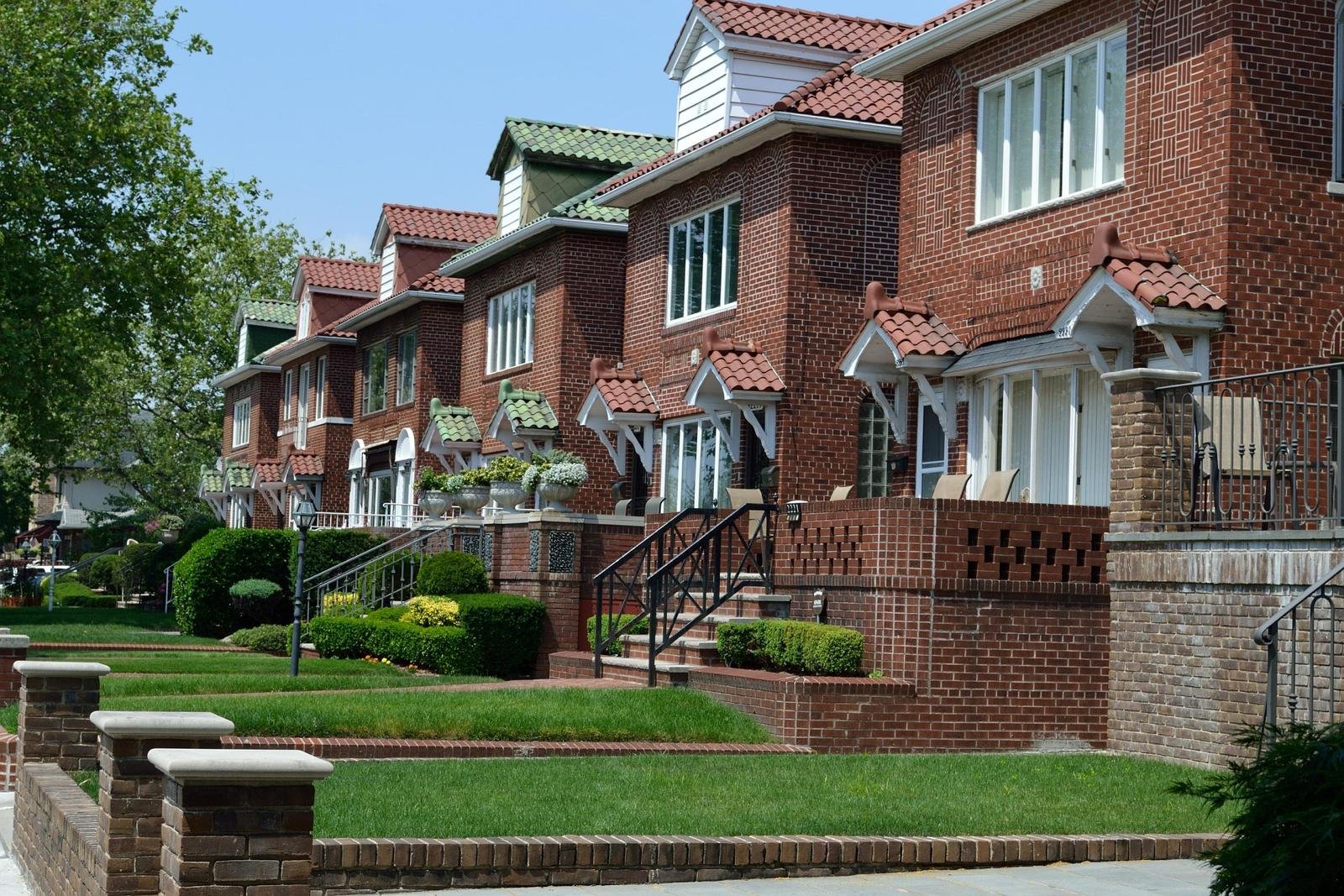
According to a recent survey, 42% of American parents have doubts their children would be able to afford to live in the same neighborhood as adults. This sentiment is not unfounded: in the last ten years, U.S. median rent has risen by 54%, far outpacing inflation of 37% over the same period. Home prices have risen at an even greater pace, by 89% during that time. Nearly one in three American households are "cost-burdened," meaning they currently spend over the recommended maximum of 30% of their income on housing costs.
Across the country, legislators have identified a potential culprit: institutional investors, enterprises that pool capital to invest in housing as an asset.
These organizations can take various forms, including real estate investment trusts (REITs), private equity, and other investment firms. Prologis, the largest U.S. REIT, is publicly traded with a current market cap of 117 billion USD. Blackstone, an alternative asset manager and private equity firm, owns over 315 USD billion in real estate, including 55 billion USD in the publicly accessible Blackstone REIT.
The argument that institutional investors are driving up costs for American households is based on a straightforward premise: single families do not have the ability to compete with institutional investors in the housing marketplace. Institutional investors have better access to data, a better ability to negotiate, and, most importantly, have a greater access to financial resources, including liquid assets and lower-cost loans. Whereas institutional investors see housing as an investment to grow in value and generate outsized returns, single family homebuyers simply seek a residence for themselves and their loved ones. Home ownership provides financial stability, by replacing a volatile rent liability with an asset that appreciates over time. Through increasing involvement in the housing market, institutional investors are driving up costs and constricting supply, forcing families out of home ownership and towards renting. Proposals to limit the activities of large property investors have gained significant traction, with over half a dozen U.S. state legislatures considering capping large investor home purchases. Regulations are being discussed across the political spectrum, with a ban on corporate landlords, for example, being proposed by both current and former U.S. Vice Presidents JD Vance and Kamala Harris.
Institutional investors have substantially increased their involvement in the U.S. housing market in the last couple of decades. According to data reported by the U.S. Government Accountability Office (GAO), in 2011, no investor owned more than 1,000 single-family rental homes in the United States. In 2022, 32 investors owned at least 1,000 single-family rental homes. The largest five of these investors owned a total of about 300,000 homes, or nearly 2% of all American single-family rentals. The dominance of large institutional investors is exacerbated when examining home ownership in cities, especially those in the American South.
Major investors (owning over 1,000 homes) own as much as 25%, 21%, and 18% of the single-family rental market in Atlanta, Georgia; Jacksonville, Florida; and Charlotte, North Carolina; respectively.
Evaluating the effect institutional investors have on the American housing market is less straightforward. The price of renting or owning a home is affected by a myriad of factors, from interest rates and federal policy to the quality of the education provided by the public elementary school a few blocks away. The fact that major investors tend to focus on a small number of high-growth cities means there is a small sample size to analyze, and the cities that are most affected are rapidly changing in countless factors, which each have their own extraneous effects on the cost of housing.
To circumvent confounding variables, researchers at UT-Austin and UNC Kenan-Flagler created a "suitability index" to measure factors that would influence a Long Term Rental (LTR) company's willingness to invest in a market. Taking into account factors such as property age, square footage, bedrooms and bathrooms, researchers measured the suitability of an area, and only compared areas where LTR's would have a similar willingness to invest. In doing so, the researchers controlled for many confounding variables, considering similar markets where the key difference was LTR ownership share.
Their findings do imply a relationship between institutional investments and the cost of housing: a one-standard-deviation increase above the mean in LTR housing ownership share correlates to 2.1% and 2.2% increases in home purchase and rent prices, respectively. Studies referenced by the GAO corroborate the existence of this relationship.
Several studies find increases in the prices of surrounding homes after institutional investor purchases. Other referenced studies also found an upward effect on rent, albeit less pronounced and not statistically significant in some instances.
A study published in The Review of Financial Studies posits that investment firms have gained "sufficient market power" in some areas to raise rents. These studies, however, are not definitive, nor do they provide a comprehensive or definite view of the impact institutional investors have on the cost of housing. Relationships are not always statistically significant, and even statistically significant correlations are not necessarily fully due to a causal relationship. There are many variables households and investors consider when purchasing a home; even a robust "suitability index" may not eliminate all significant confounding variables.
There are also practical limits to how much of the increase in housing costs can be explained by institutional investors. Whereas institutional investors have focused on specific neighborhoods and cities overwhelmingly in the Sun Belt region, housing prices have increased across the country. These organizations cannot be explanations for the rising cost of rent and home ownership in areas where they make few or no investments. Furthermore, issues in the American housing market go beyond demand.
With a current shortage of 4.7 million homes, supply is simply not sufficient. And, the rate of new housing development is not only failing to meet demand: it has actually been slowing down.
Ultimately, available evidence does support the idea that the overprevalence of institutional investors in some markets has made a contribution to housing becoming less affordable. They are not the only factor, but find a place as one, especially in growing cities in the Sun Belt. Solely focusing on regulating institutional investors would not be sufficient to ameliorate the issue of housing affordability, especially considering the necessity of increasing the rate of housing construction to meet ever-growing demand. That being said, those regulations could certainly be pursued alongside a slate of other measures, public and private. Comprehensive solutions may not be simple, and the path forward may become long and multi-faceted as adjustments are made along the way. But, to address an issue this meaningful, our best first step is finding a place to start.
Bibliography
1. Staples, Joseph. "How America's Housing Crisis Changed How People View 'Affordable Housing': Survey." New York Post, August 26, 2025.
2. Niemann, Christa. "Is Rent Outpacing Inflation? A Look at U.S. Median Rent Prices from 2015–2025." Innago, October 15, 2025.
3. Federal Reserve Bank of St. Louis. "Case Shiller Index." FRED, Federal Reserve Bank of St. Louis. Accessed October 29, 2025.
4. U.S. Inflation Calculator. "Inflation." Accessed October 29, 2025.
5. Hoover, Makinizi, and Isabella Lucy. "The State of Housing in America." U.S. Chamber of Commerce, March 17, 2025.
6. National Low Income Housing Coalition. "Institutional Investors May Target Single-Family Rental Housing Submarkets to Drive Up Rents."
7. Vidal, Karl Angelo, and Chris Hudgins. "Prologis Tops List of Largest US Equity REITs by Market Cap in 2024." S&P Global Market Intelligence.
8. "Prologis, Inc. (PLD) Stock Price, News, Quote & History." Yahoo Finance. November 9, 2025.
9. Waters, Carlos. "Blackstone Is Buying Rental Homes Again — Here's Why." CNBC, July 16, 2025.
10. Greenblatt, Alan. "Over Half a Dozen States Are Considering Banning or Capping Home Purchases by Large Investors." Governing, accessed October 29, 2025.
11. U.S. Government Accountability Office. Housing: Wide-Scale Institutional Investor Study. GAO-24-106643. Washington, DC, 2024.
12. Gupta, Arpit, Zhi Da, and Peizhen Zhu. The Effect of Institutional Investors on the Housing Market. July 2024.
13. Divounguy, Orphe. "The U.S. Faces a Shortage of Nearly 4.7 Million Homes." Zillow Research, July 9, 2025.
14. Mayyasi, Alex. "Here's What Happens When Private Equity Buys Homes in Your Neighborhood." Planet Money, NPR, September 9, 2025.